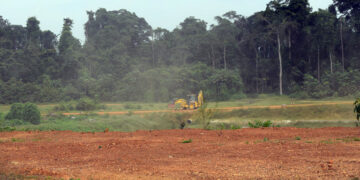







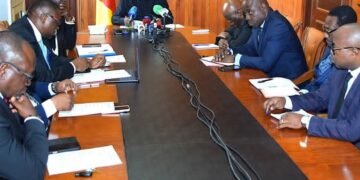

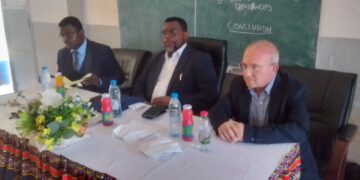




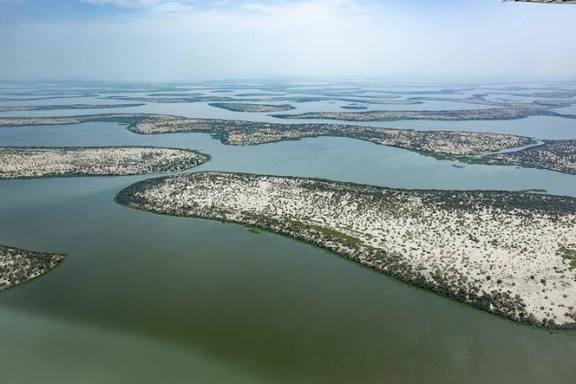
The Lake Chad basin is approaching a decisive moment in its recovery. On Monday, December 15, 2025, a technical delegation officially unveiled the operational rollout of the Chad Connectivity and Integration Project (PCIT), marking the transition from planning to action.Backed by $170 million in financing from the World Bank, the initiative is designed to open up this strategic region and transform it into a connected logistics and trade corridor. The ambition is clear: restore mobility, stimulate commerce, and position Lake Chad as a driver of regional economic growth.On site, progress is already taking shape. Under the leadership of Makka Issa Goukouni, the PCIT technical mission has begun mapping out locations for modern marketplaces, solar-powered storage facilities, and customs infrastructure. These investments aim to secure trade flows while creating lasting income opportunities for thousands of small-scale traders—many of them women.The project directly targets the structural constraints that have long limited development in Chad’s Lake province. Planned works include paving 55 kilometers of the Liwa–Rig Rig trans-Saharan road, building 12 kilometers of access roads into Bol, rehabilitating around 50 kilometers of rural tracks, and constructing markets and solar-powered warehouses in Bol and Baga-Sola. At the same time, the PCIT places strong emphasis on reinforcing local value chains, notably in fishing and spirulina production.Altogether, nearly 3.8 million people stand to benefit, including host communities, refugees, and internally displaced populations. For Saleh Haggar Tidjani, the government’s general delegate for the Lake province, the project represents “a powerful tool for reviving the local economy,” particularly now that the security situation has largely stabilized—an essential condition for attracting investment and restoring confidence.Technical assessments are ongoing in Bol and Baga-Sola, with upcoming missions planned for Guité and Mani in the Hadjer-Lamis region. These field visits are paving the way for a second operational phase scheduled for January 2026, which will include direct involvement from World Bank specialists and security authorities.Beyond infrastructure alone, the PCIT carries a broader vision: ensuring that economic growth benefits the most vulnerable. In a region deeply affected by years of crisis, the project seeks to foster inclusive, resilient, and sustainable development centered on the Lake Chad basin.
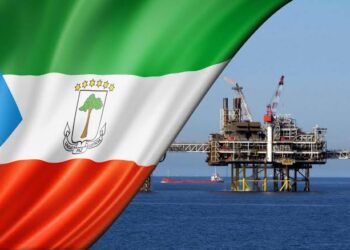
equatorial Guinea emerges as African energy hub
Equatorial Guinea is making waves in the energy sector. The country is set to present its EG Ronda 2026 licensing...