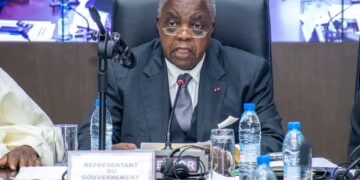
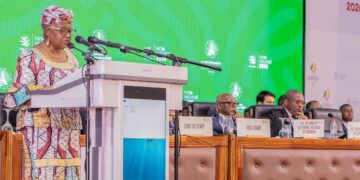


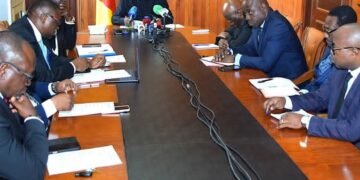

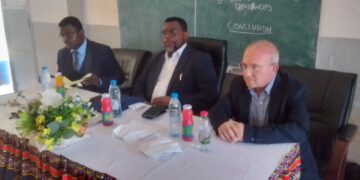

The first annual statutory session of the ECCAS Committee of Elders held in Libreville, hosted at the Gabon National Assembly as the chosen venue for this high-level gathering. The meeting brought together members from a broad pool of candidates and marks a significant step in advancing the committee’s work on conflict prevention, mediation, and peacebuilding across Central Africa.
The main item on the agenda was the approval of the Committee of Elders’ Action Plan and the 2026 budget. These strategic documents were previously reviewed at a technical meeting in Bujumbura, Burundi (November 24–26, 2025) and required formal validation to provide the group with a clear operational framework, including prioritized activities, a tentative schedule, and secured funding.
The event occured within a notable institutional context, following the recent installation of Dr. Ezéchiel Nibigira as the President of the ECCAS Commission. This development facilitated direct engagement between the regional executive and the Committee of Elders on key issues such as preventive diplomacy, political crisis management, and the enhancement of early-warning mechanisms in the subregion.
Beyond budget and action-plan deliberations, participants considered inputs to enrich the draft Regional Framework for mediation and preventive diplomacy. The outcomes of talks with the Commission President went into the final resolutions, alongside the formal validation of the Committee of Elders’ new Bureau, a crucial step for strengthening internal governance.
A total of 23 delegates took part, including seven statutory members, four pool members, seven assistants, and six ECCAS Commission officials, among them the Commissioner for Political Affairs, Peace and Security, plus several technical specialists. The proceedings were conducted in person and combined plenary sessions with focused group discussions to foster interactive and technical exchanges.
By the end of this first annual statutory session, the Committee of Elders adopted a consolidated 2026 roadmap. The overarching goal was to reinforce the body’s role as a strategic link in crisis prevention and regional stability for Central Africa, in a context shaped by ongoing security and political challenges.